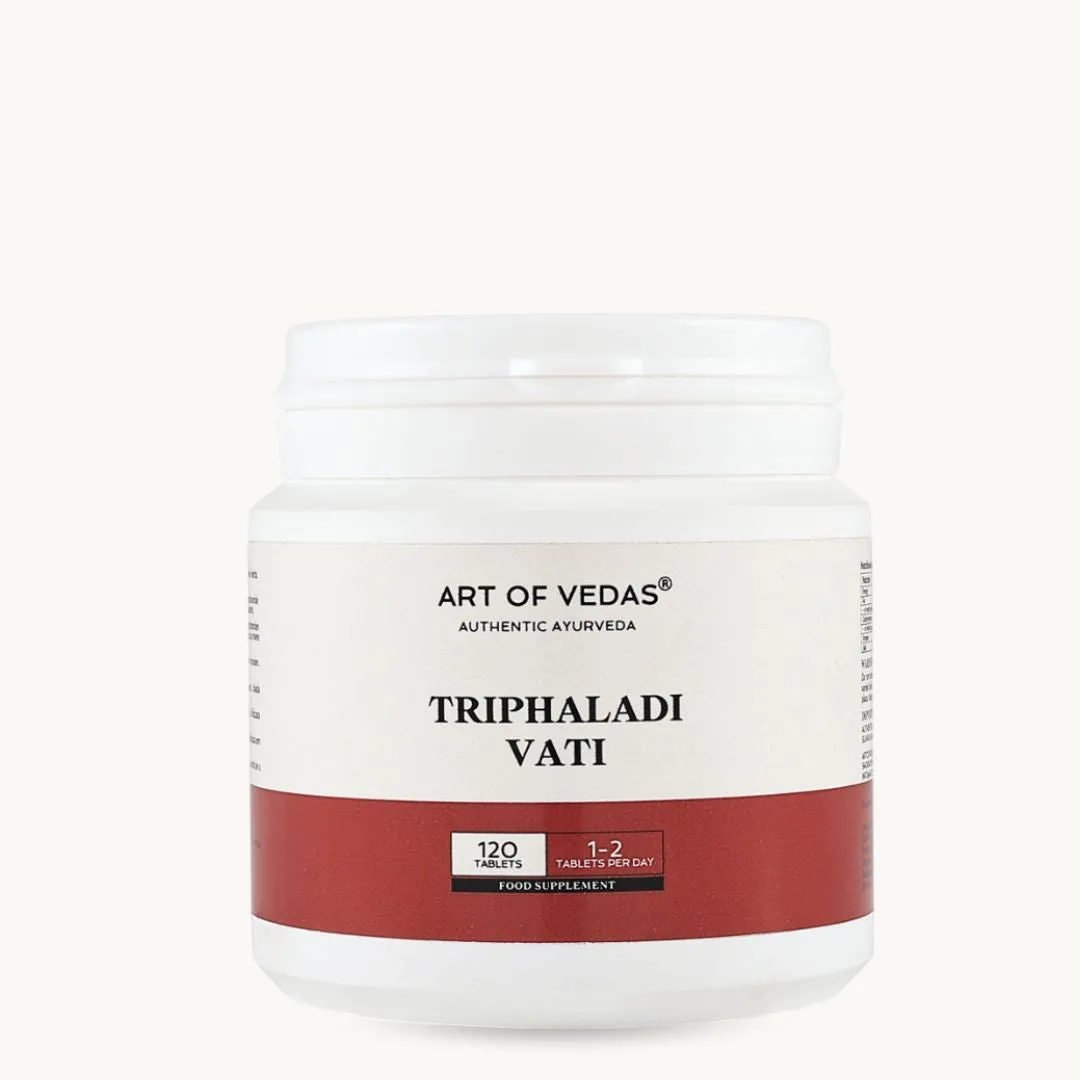
Triphala Vati is the tablet form of the best-known powder in Ayurveda. Vati, sometimes written as Gulika in the South Indian tradition, simply means a rolled tablet or pill. Where Triphala Churna asks you to measure a powder and stir it into warm water, the Vati presents the same three-fruit formula in a compact, pre-portioned shape. This guide explains how classical tablets are traditionally made, what sits inside a Triphala Vati, and when the tablet format suits a daily routine better than the loose powder.
From Churna to Vati: How Classical Tablets Are Made
The traditional method begins with the finished Churnam. The powder is worked into a paste, classically with a decoction of the same fruits, herbal juices or another binding medium described in the formulation literature, then rolled into small uniform tablets and dried until firm. Nothing about the underlying formula changes; the Vati is a different presentation of the same blend. The wider tablet tradition, including the distinction between Vati and Gulika and the classical rolling methods, is described in our guide to Gulika and Vati, the classical Ayurvedic tablets.
What Is Inside Triphala Vati
The formula is the familiar trio in equal parts: Amalaki, the sour fruit of Emblica officinalis; Bibhitaki, the astringent fruit of Terminalia bellirica; and Haritaki, the fruit of Terminalia chebula that classical authors honour as the king of herbs. Together the three fruits cover five of the six classical tastes. Some traditional makers add a small proportion of a binding substance to hold the tablet together, so the label of the specific product you buy is always the authoritative list. The full background to the blend itself is set out in our Triphala Churna guide.
Why Choose the Tablet Format
The Vati exists because classical pharmacies understood something quite modern: not everyone will prepare a powder every day. Within the tradition, the tablet format is valued because it is:
- Pre-portioned, so each tablet carries a consistent quantity of the blend
- Practical for travel and for days spent away from home
- Considerate to those who find the pronounced taste of the loose powder difficult
- Simple to fit into an existing evening routine alongside warm water
- Stable to store when kept cool, dry and tightly closed
Traditional teaching still gives the freshly stirred powder a certain precedence, since taste is considered part of how a formulation is experienced, but the texts themselves make room for rolled preparations precisely because consistency and convenience matter.
Vati, Churna or Capsule: Which Should You Choose
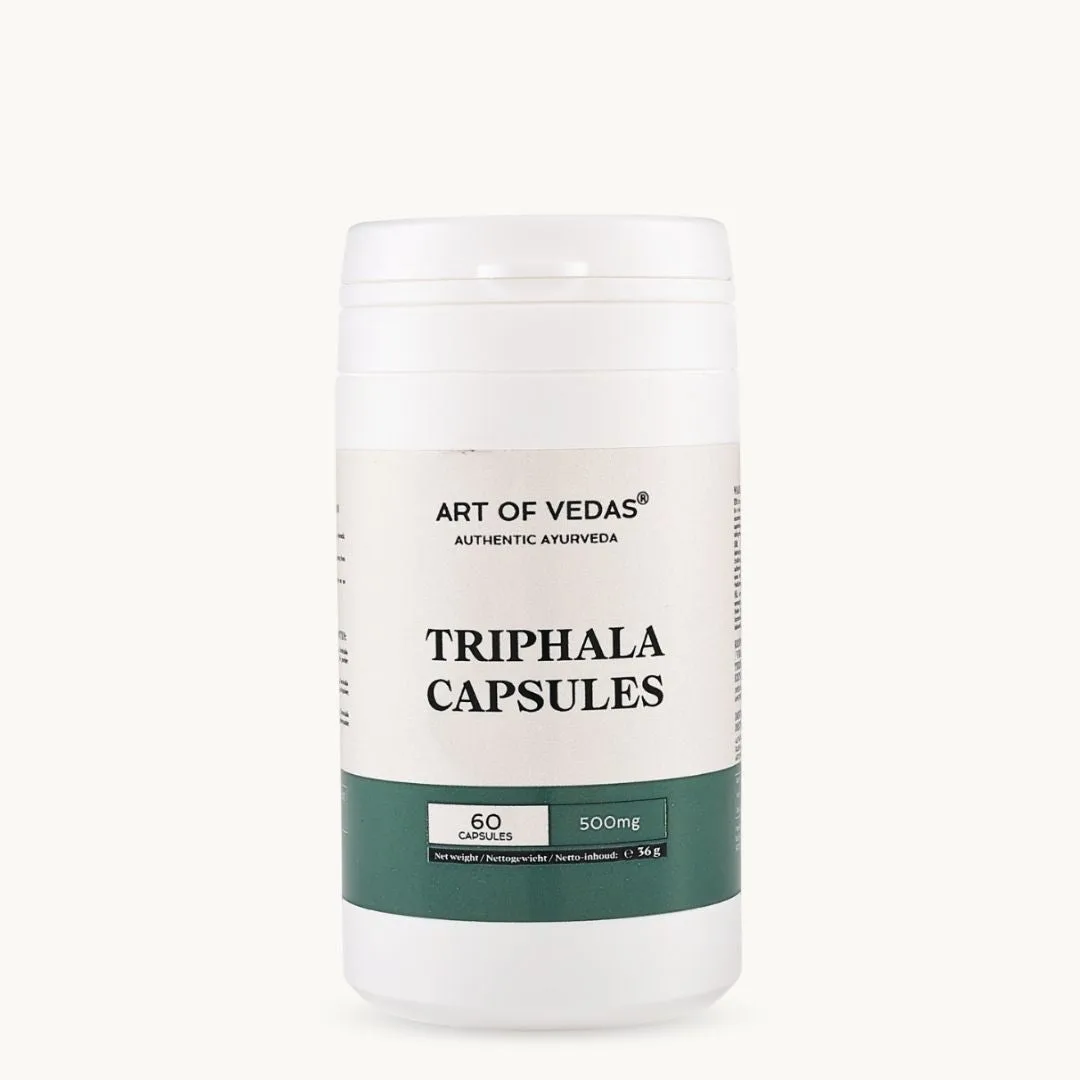
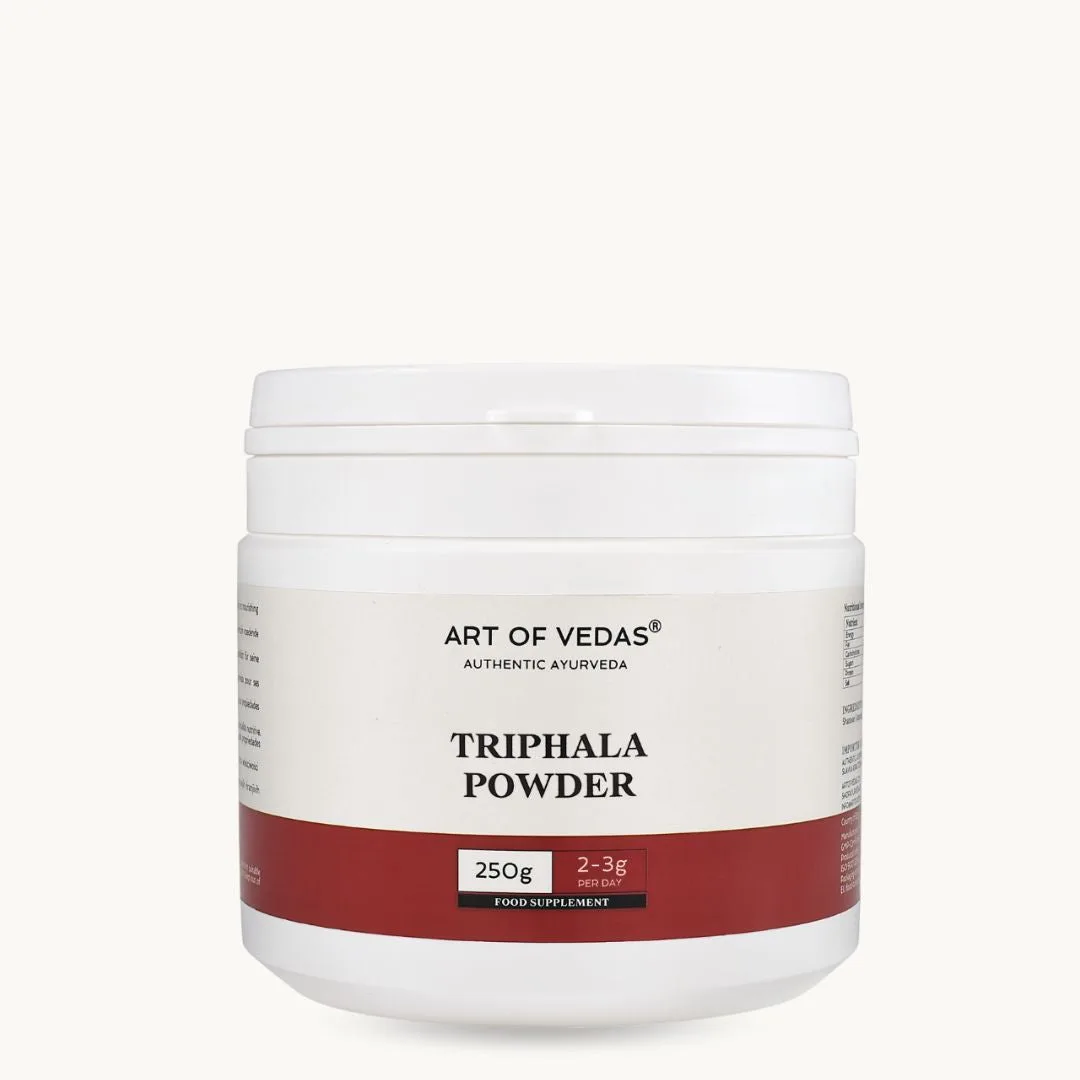
Choose the Triphala powder if you value the classical preparation ritual and the full taste experience. Choose the Triphaladi Vati tablets if you want the traditional rolled format with pre-measured portions. Choose Triphala capsules if you prefer a modern, taste-free shell around the same powder. A fuller comparison of the three presentations, including how each behaves in daily use, is available in our article on choosing between Churna, Vati and capsules. Whichever format you select, follow the recommended intake stated on the label, and speak to a qualified practitioner if you are unsure which presentation fits your routine.
Frequently Asked Questions
What is Triphala Vati?
Triphala Vati is the classical tablet form of Triphala, the Ayurvedic blend of Amalaki, Bibhitaki and Haritaki in equal parts. The powder is worked into a paste, rolled into tablets and dried according to traditional pharmacy methods.
Is Triphaladi Vati the same as Triphala Vati?
The names are used almost interchangeably. The suffix adi means "and the others", indicating a formula that begins with Triphala and may include supporting ingredients. Check the label of the specific product for its exact composition.
How is Triphala Vati traditionally taken?
Tradition favours the evening with warm water, mirroring the custom for the powder. Follow the recommended daily intake stated on the product label rather than any general rule.
Do tablets work differently from the powder?
The underlying formula is the same. The practical differences are taste, portioning and convenience. Traditional teaching values the taste of the powder, while the tablet suits routine and travel.
How should I store Triphala tablets?
Keep them cool, dry and tightly closed, away from direct sunlight, and observe the date printed on the packaging.
Can I take Triphala Vati alongside other Ayurvedic preparations?
Many people combine classical preparations within one routine, but the sensible course is to ask a qualified Ayurvedic practitioner to review the combination you have in mind.
The products mentioned in this article are food supplements or traditional Ayurvedic preparations. Food supplements are not a substitute for a varied, balanced diet and a healthy lifestyle, and they are not intended to diagnose, treat, cure or prevent any disease. Always follow the directions and the recommended daily intake stated on the product label, and consult a qualified Ayurvedic practitioner or healthcare professional if you are pregnant, nursing, taking medication or have an existing medical condition.