Few parts of the body record a working day as faithfully as the neck and shoulders. Hours at a desk, a laptop angled slightly too low, a phone held between ear and shoulder: by evening the whole region feels tight and shortened. Ayurveda's answer is not complicated. Warmth, a suitable preparation and ten minutes of slow, repetitive strokes. In the classical tradition that preparation is often a Kuzhambu, a semi-solid formula whose texture is almost ideal for this awkward, vertical part of the body: it stays where you put it instead of running down the back.
Why the format works on the neck and shoulders
A Kuzhambu is not an oil. Cooked on a three-fat base of sesame, coconut and castor with herbal decoctions and pastes, it sets to a soft, dense consistency that softens again with gentle warmth. Applied to the sides of the neck or the tops of the shoulders it forms a thin, stable layer, absorbs slowly and keeps its botanicals in contact with the area for the length of the session. An oil in the same position is halfway down the spine within a minute. The general method of warming the jar and judging quantity is described in our guide on how to warm and apply a Kuzhambu. In professional settings this same region is served by Greeva Basti, a warm pooling therapy performed on a treatment table; the routine below is its modest household relative, suited to an ordinary evening.
What the routine offers a desk-bound day
- Deliberate warmth for a region that spends the day held still
- Traditional comfort for the tightness that follows long hours of screen work
- A self-application sequence that needs no assistance and no equipment beyond a towel
- A reason to sit still, breathe slowly and lower the shoulders for ten minutes
- Rich, nourishing care for skin that collars and straps rub all day
The sequence, step by step
Warm the closed jar in a bowl of hot water for five minutes. Sit on a chair with the back straight and the shoulders consciously dropped. Take half a teaspoon of the softened preparation and begin at the base of the skull: small, slow circles with the fingertips down the sides of the neck, never pressing on the spine itself. Continue outward along the tops of the shoulders with broader circles, using the opposite hand for each side. Repeat the whole path five or six times, unhurried.
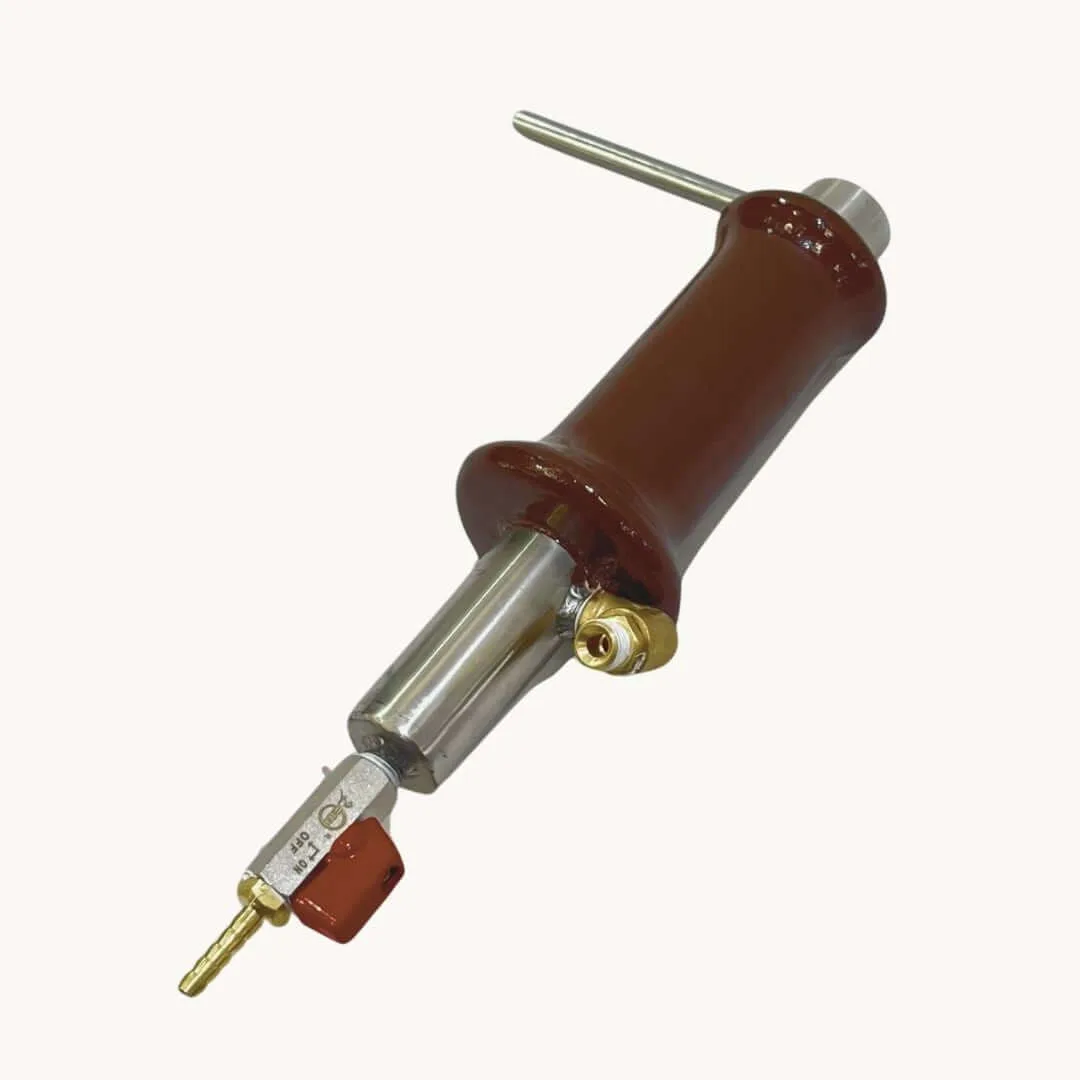
Follow with gentle heat. Lay a warm, damp towel over the shoulders for five minutes and let the warmth carry on the work; a warm massage aid such as the Nadi Swedana massage tool serves the same purpose in a more traditional form. Afterwards, wipe away any residue. Small breaks during the working day, a raised screen and this evening sequence together do more than any one of them alone. For the region directly below, our Kuzhambu lower back routine continues the same approach.
Choosing the preparation
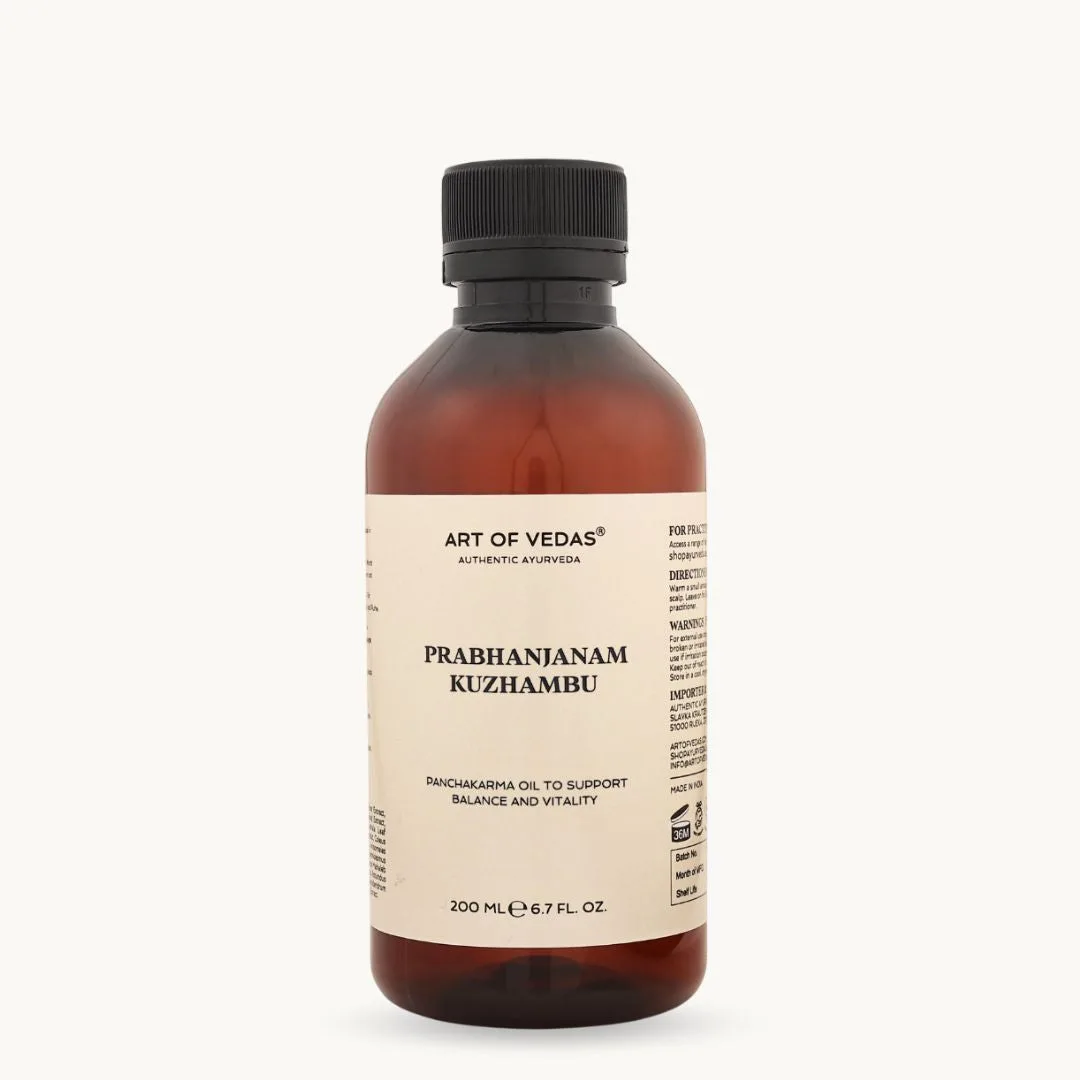
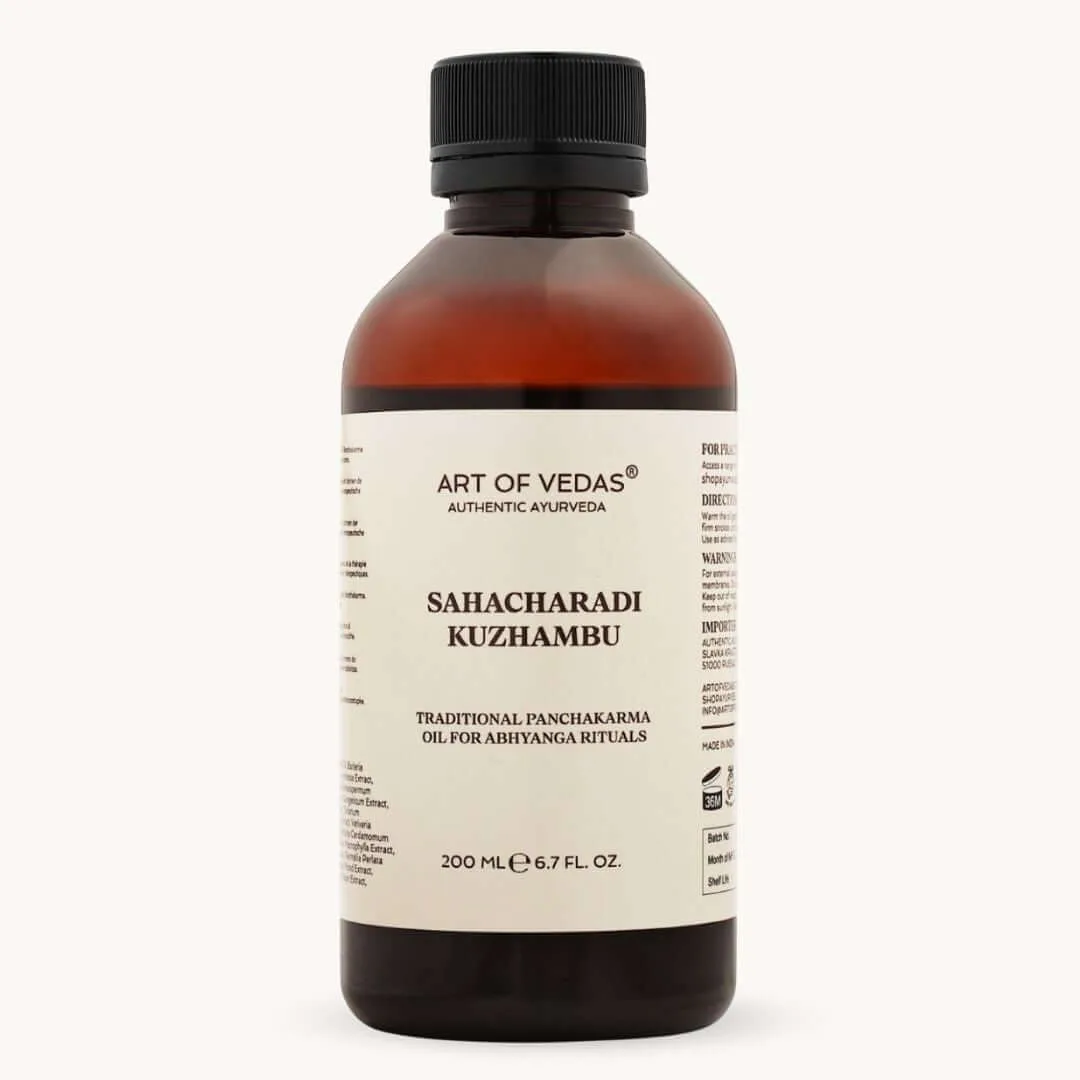
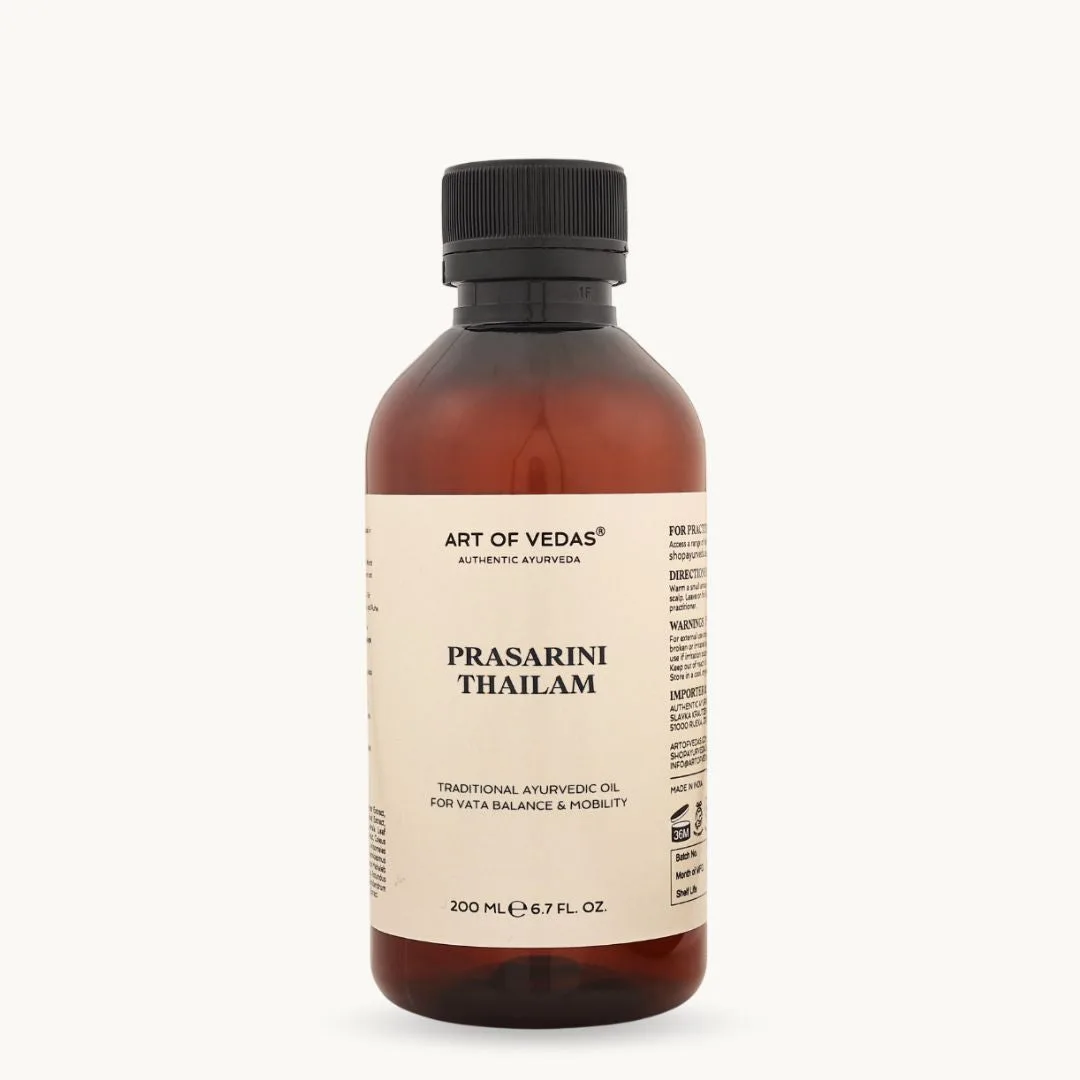
Two house formulas suit this routine. Sahacharadi Kuzhambu is built around Sahachara, a botanical long associated with the muscular lower body, prepared as decoction and paste in the three-fat base; many use it across the whole back of the body. Prabhanjanam Kuzhambu belongs to the classical Vata-care family, composed of warming botanicals cooked into the same rich base, and is the traditional lean for the neck and shoulder region. Both come from the flowing-oil tradition described in our Prasarini Thailam guide, whose formula family serves the same region in oil form.
Frequently Asked Questions
How often should I do this routine?
On desk-heavy days, daily use is reasonable. Most people settle into three or four evenings a week and keep the towel step even on nights they skip the rest.
Can I apply it during the workday?
The evening suits the ritual better, since the preparation should stay in place for twenty minutes or so. A short version in a lunch break is possible if you can rest afterwards.
Should I massage the spine itself?
No. Work the muscles to either side of the spine and the tops of the shoulders, keeping pressure gentle and strokes slow.
What if the tightness does not ease?
A self-care routine has limits. If discomfort in the neck or shoulders persists or worsens, consult a qualified professional rather than increasing pressure or quantity.
Does the preparation mark clothing?
It can. Wear an old shirt during the session and wipe the area with a warm, damp towel before dressing again.
This article describes traditional Ayurvedic practice for general information and personal care. It is not medical advice. If you are pregnant, have a health concern or know your skin reacts easily, please speak with a qualified professional before beginning a new routine.