Gokshura is unusual in the Ayurvedic cabinet: you will meet it as two different materials from one plant.
Two parts, two contexts
As a single herb Gokshura is most often the fruit, the small spined structure the plant is named after. Inside Dashamula it is the root, because that group is defined as ten roots. The texts are specific about which, and a formula that names Gokshura is understood to mean the part its tradition specifies.
Why a label must say
A fruit and a root from one plant are different ingredients. Naming only the species describes half the material, which is the same point the guide to Twak makes for bark.
The vocabulary
Phala is fruit, Mula is root. Where a classical text specifies, it uses those words, and a careful modern label does the equivalent in plain language.
What Art of Vedas offers
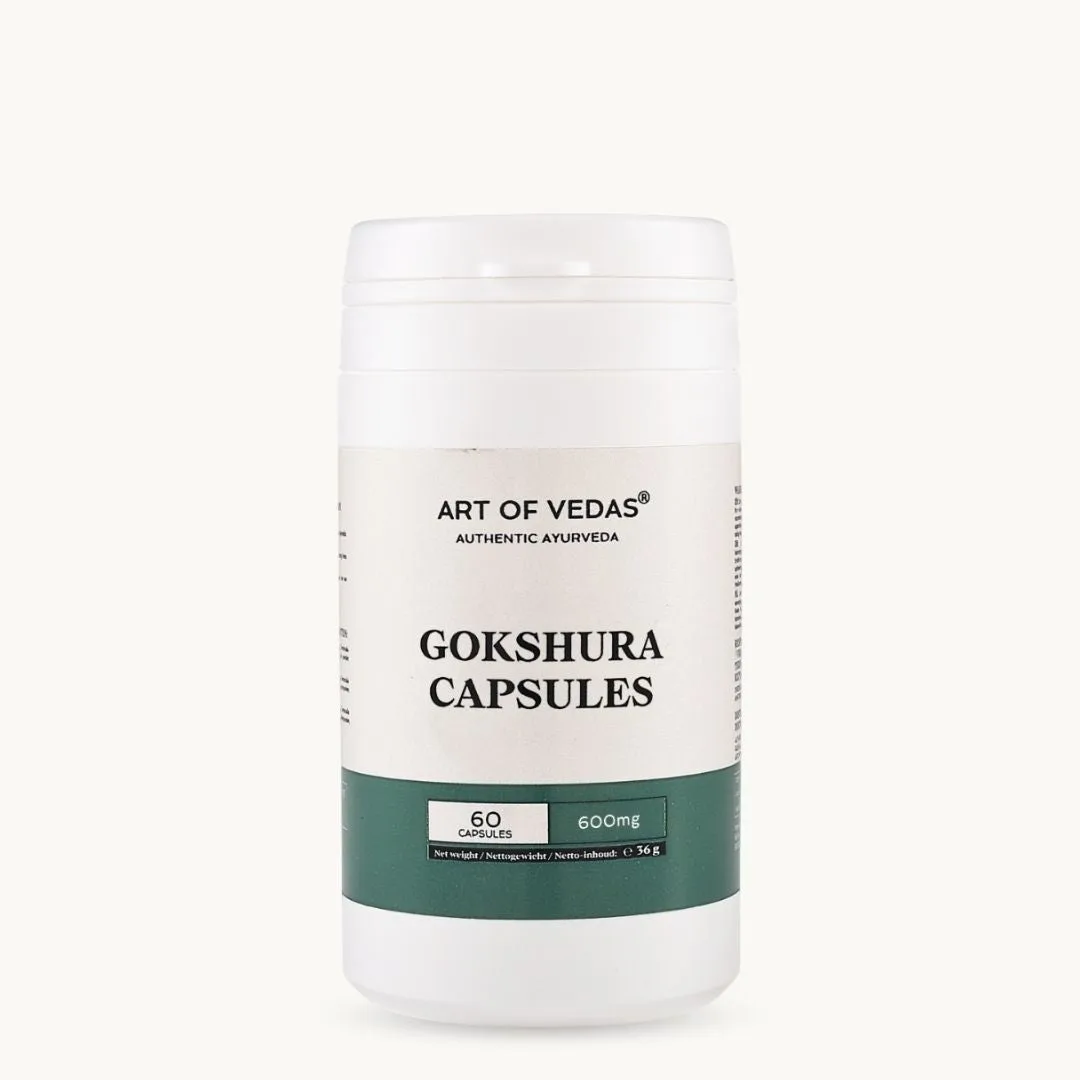
Gokshura Capsules are a single-herb preparation of Tribulus terrestris, with the part stated on the label rather than left to inference.
Frequently Asked Questions
Is Gokshura a fruit or a root?
Both, depending on the preparation. As a single herb it is usually the fruit; in Dashamula it is the root.
What is Phala?
The Sanskrit for fruit.
Does the part change the material?
Yes, which is why it belongs on the label.
This article is for educational purposes and describes the classical Ayurvedic record. The products mentioned are food supplements, not a substitute for a varied, balanced diet, and are not intended to diagnose, treat, cure or prevent any disease. Take them under the guidance of a qualified Ayurvedic practitioner.